

Conveyor belts in tobacco production demand an extremely sophisticated manufacturing process where precision, speed, and hygiene are paramount. Conveyor systems are not merely transport equipment; they are the 'lifelines' connecting stages from raw material handling to finished product packaging.The tobacco processing requires various conveyor belts and processing belts for different production stages. We offer halogen-free, blowing agent-free, and nitrogen-free polyolefin and polyester belts. They are also food-grade (FDA) to meet ever-increasing safety standards.
Conveyor Belt Classification by Production Process
The tobacco production process is divided into two main stages with distinct conveyor belt requirements:
Primary Processing Stage
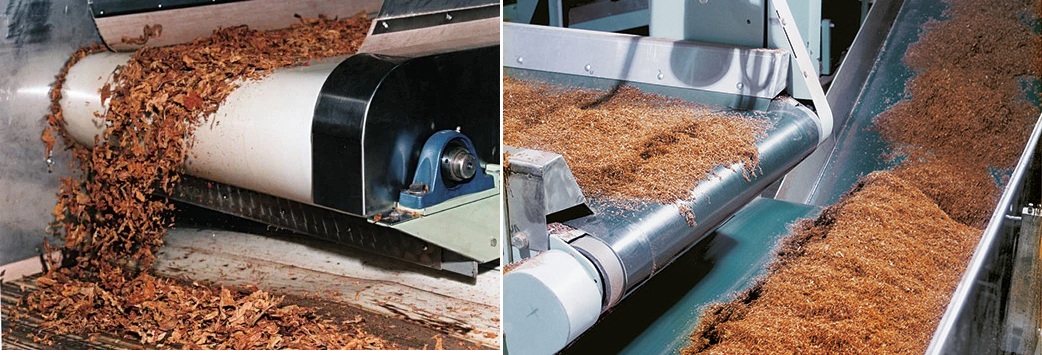
In this stage, tobacco leaves are processed to form cut rag.
-
Oil-Resistant PVC/PU Conveyor Belts: Tobacco leaves contain abundant natural oils. Conveyor belts must be oil-resistant to prevent swelling or deformation.
-
Cleated Conveyor Belts: Often feature cleats for transporting tobacco leaves to bins or cutters without slippage.
-
Drying and Cooling Conveyor Belts: Utilize stainless steel mesh or "Teflon (PTFE/Silicone)" heat-resistant belts to allow hot/cold air to pass through, ensuring the moisture content of the cut rag meets standards and withstanding extremely high temperatures (up to 260ºC), offering absolute non-stick properties.
Secondary Processing Stage
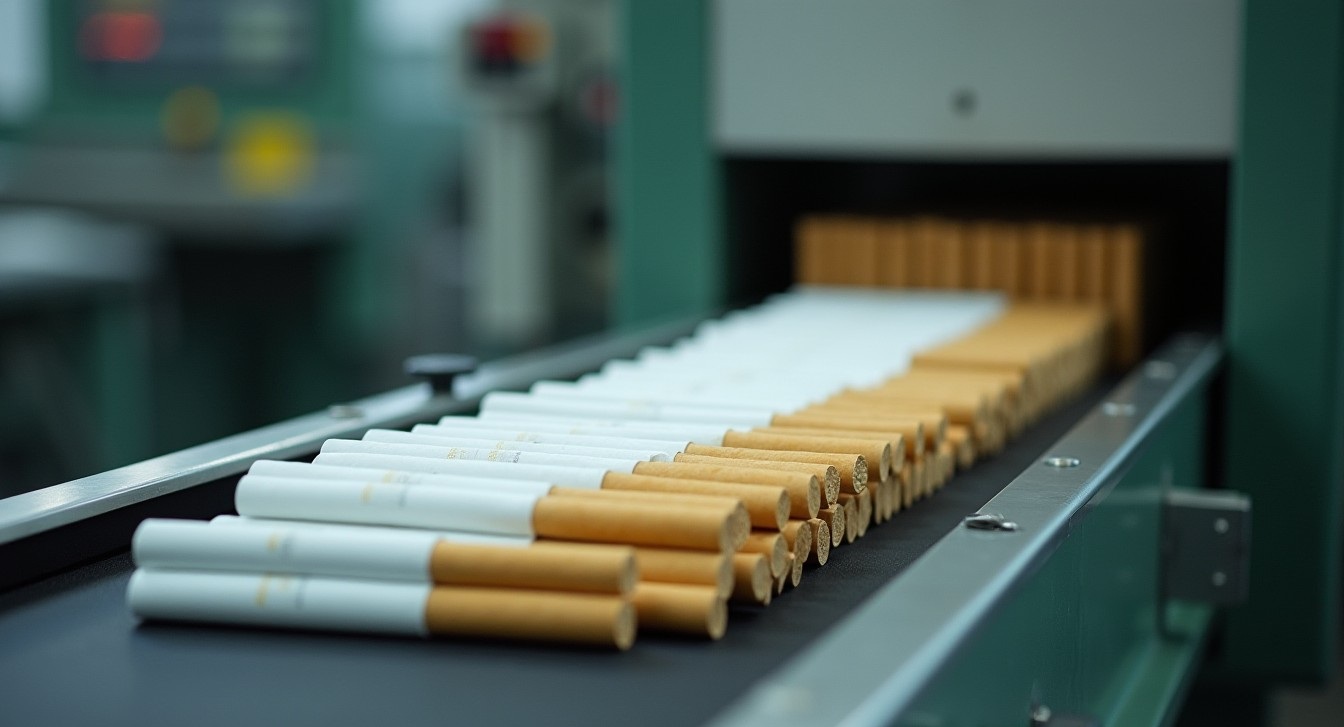
This stage involves rolling cigarettes, attaching filters, and packaging.
-
High-Speed Conveyor Belts: Require extremely low vibration to prevent spillage of tobacco or damage to the cigarette structure when moving at speeds of thousands of cigarettes per minute.
-
Vacuum Conveyor Belts: Help secure cigarettes or packaging during labeling or camera-based quality inspection.
Technical Requirements for Tobacco Industry Conveyor Belts
Due to the nature of tobacco products (sensitive to moisture, flavor, flammable, and prone to fine dust), conveyor systems must meet the following criteria:
-
Antistatic: Crucial for preventing fires and explosions caused by static electricity buildup from tobacco dust.
-
Food Grade (FDA/EU): As tobacco is a consumer product, conveyor belt materials must be non-toxic, odorless, and free from chemical leaching.
-
Non-stick and Oil-Resistant: Tobacco leaves and cut rag contain natural oils. Conveyor belts must be oil-resistant to prevent deformation, be easy to clean, and prevent mold or cross-contamination.
-
Gentle and Low Vibration: To avoid crushing or breaking the cut rag or damaging cigarettes during high-speed packaging.
Conveyor belts with TPO and TPEE coatings from The Cao Belt Company comply with FDA, USDA, EU, and Japanese regulations. Furthermore, they are suitable for pyrolysis processes, meaning the belt material will not release harmful substances during combustion, a specific requirement of the tobacco industry. Notably, TPEE-coated conveyor belts ensure high abrasion resistance and perform well in both high and low temperatures.
Conveyor belts used in tobacco production include the following types:
- PVC (polyvinyl chloride) belts: -15 ~ 80ºC
- PU (Polyurethane) belts: -20 ~ 80ºC
- PE (polyolefine) belts: -30 ~ 60ºC
- TPEE (Polyester) belts: -30 ~ 100ºC
- Silicone belts: -30 ~ 150ºC
Looking for the optimal conveyor belt solution for your production facility?
Call now: 0788388588
Email: phongkinhdoanh@thecaobelt.com
Website: thecaobelt.com
The Cao Belt Company – Accelerate Production, Elevate Efficiency!